Oleo Pine Resin Merkusii

As Indonesia accounts for approximately 9.2% of the global output—producing around 80,000 tonnes of premium gum rosin annually from sustainably managed Pinus merkusii stands in Java and Sumatra—we stand ready as your reliable supply partner. We accommodate custom volume requirements, supplying our products strictly by designated grade, secure steel drums, or Full Container Loads (FCL). To ensure complete transparency and international compliance, every single lot is backed by a comprehensive Certificate of Analysis (COA) verifying its chemical properties.

Easy Deal

"Prior to meeting the customer, we ensure that all trade requirements—specifically quality specifications (COA), volume, pricing, and payment terms—are thoroughly verified."

Quality Guarantee

"Prior to the execution and signing of the sales contract, both involved parties must ensure that all terms and conditions are fully clarified and mutually agreed upon for legal safety."

Fast Process

"Following the execution of the sales contract, the Service Level Agreement (SLA) shall commence immediately, pursuant to our company's Standard Operating Procedures (SOP)."

Operations

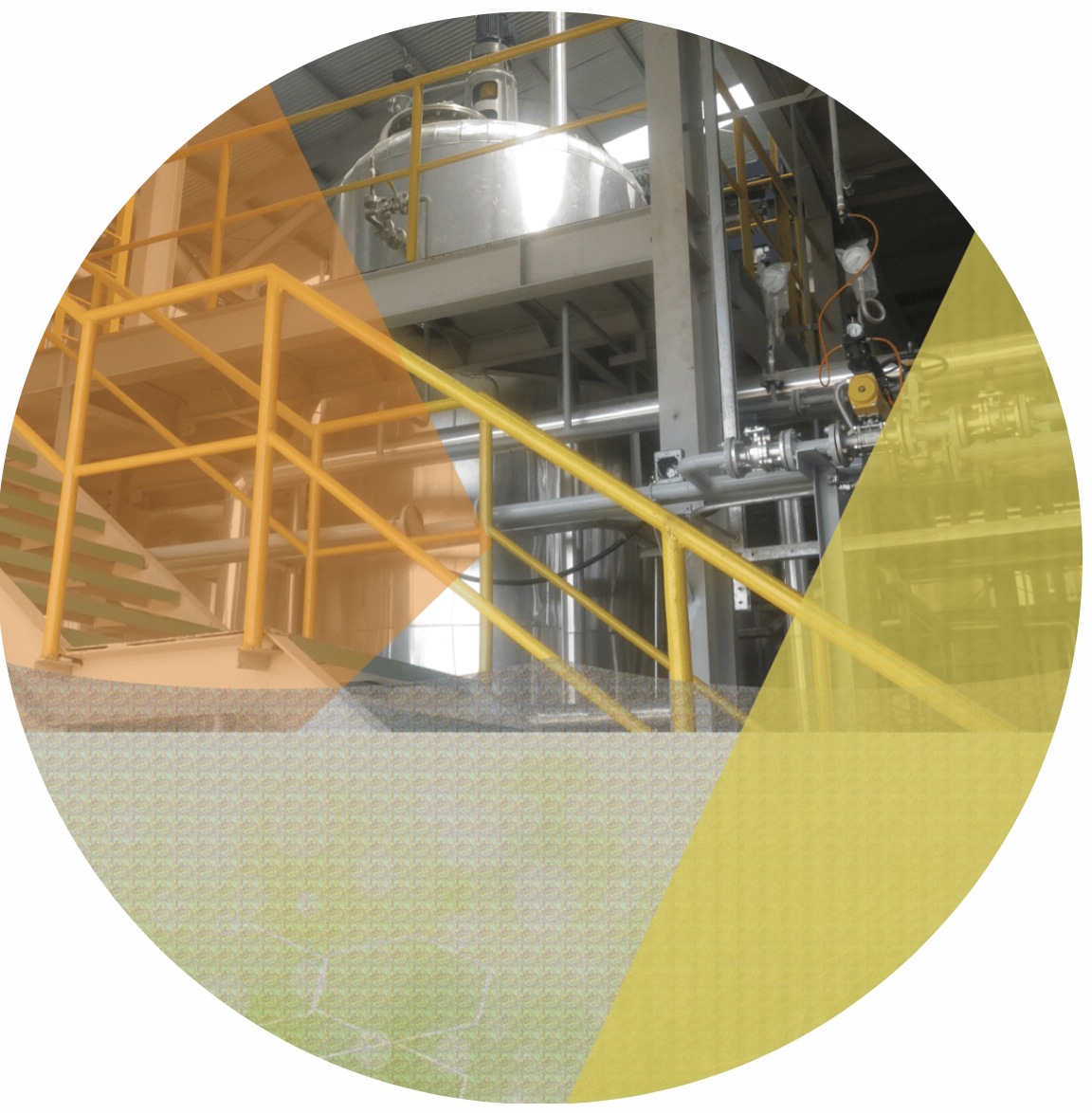
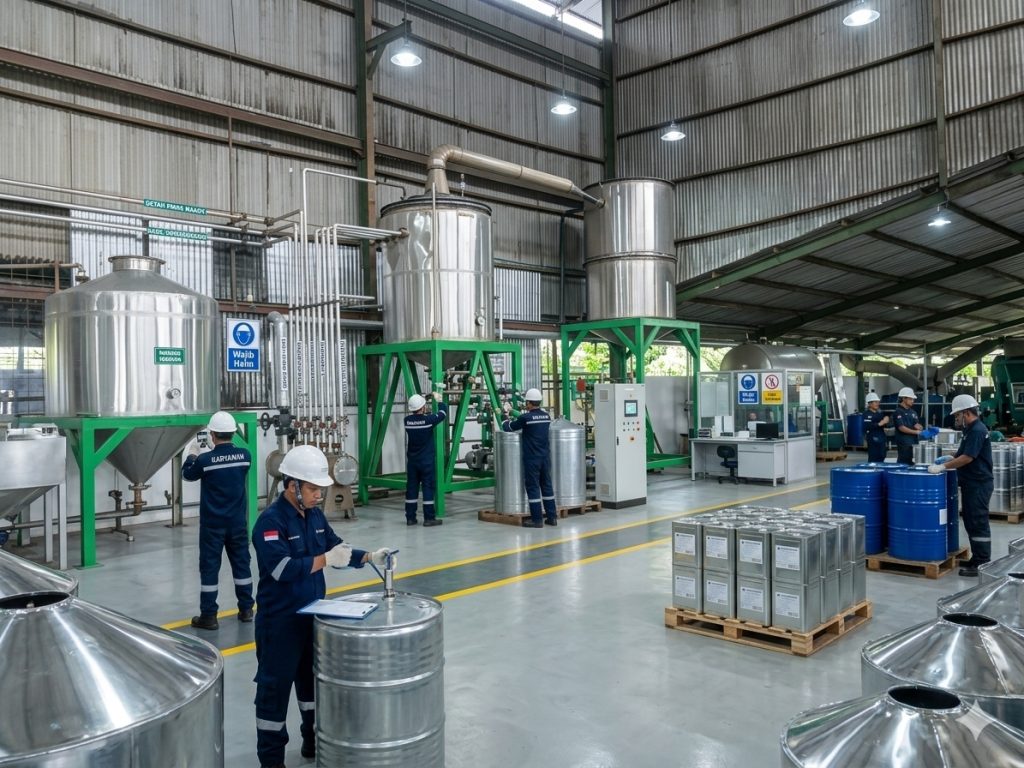
We operate an Oleo Pine Resin refinery with a daily production capacity of 20 metric tons.

Our Oleo Pine Resin (Pinus merkusii) is sustainably sourced from premium plantations across Java and Sumatra, Indonesia. Our facility operates 12 hours a day, 5 days a week. However, to accommodate high-volume contracts and urgent buyer demands, we have the operational capacity to scale up to a 24-hour production cycle (round-the-clock shifts) supported by a workforce of over 100 skilled laborers. This ensures a stable, high-capacity supply chain tailored to your business needs.
A few things we’re great at

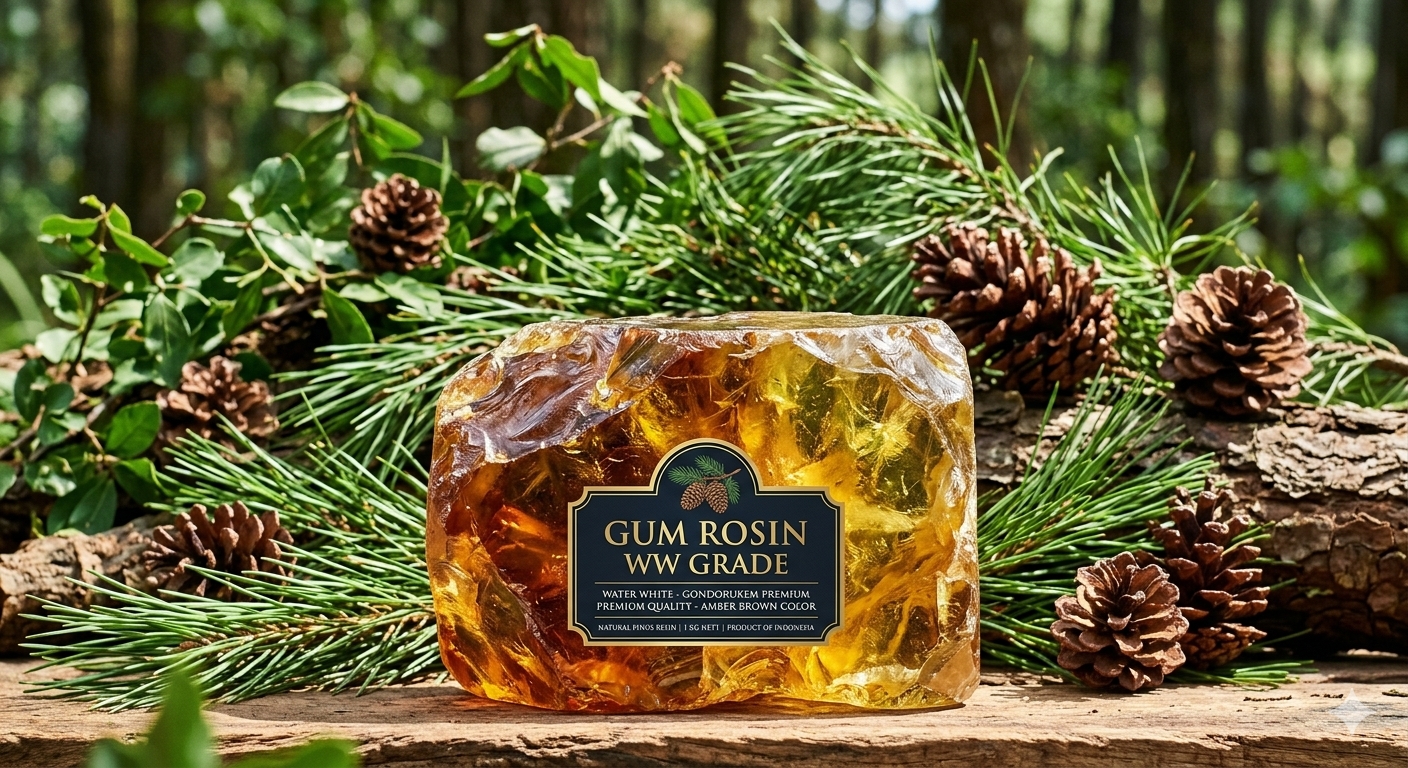
Grade letters run from X, the palest, down through WW, WG, N, M and K as the colour deepens. Colour is a proxy for how cleanly the resin was handled — so the letter on the drum tells a formulator most of what they need before the COA is even opened.
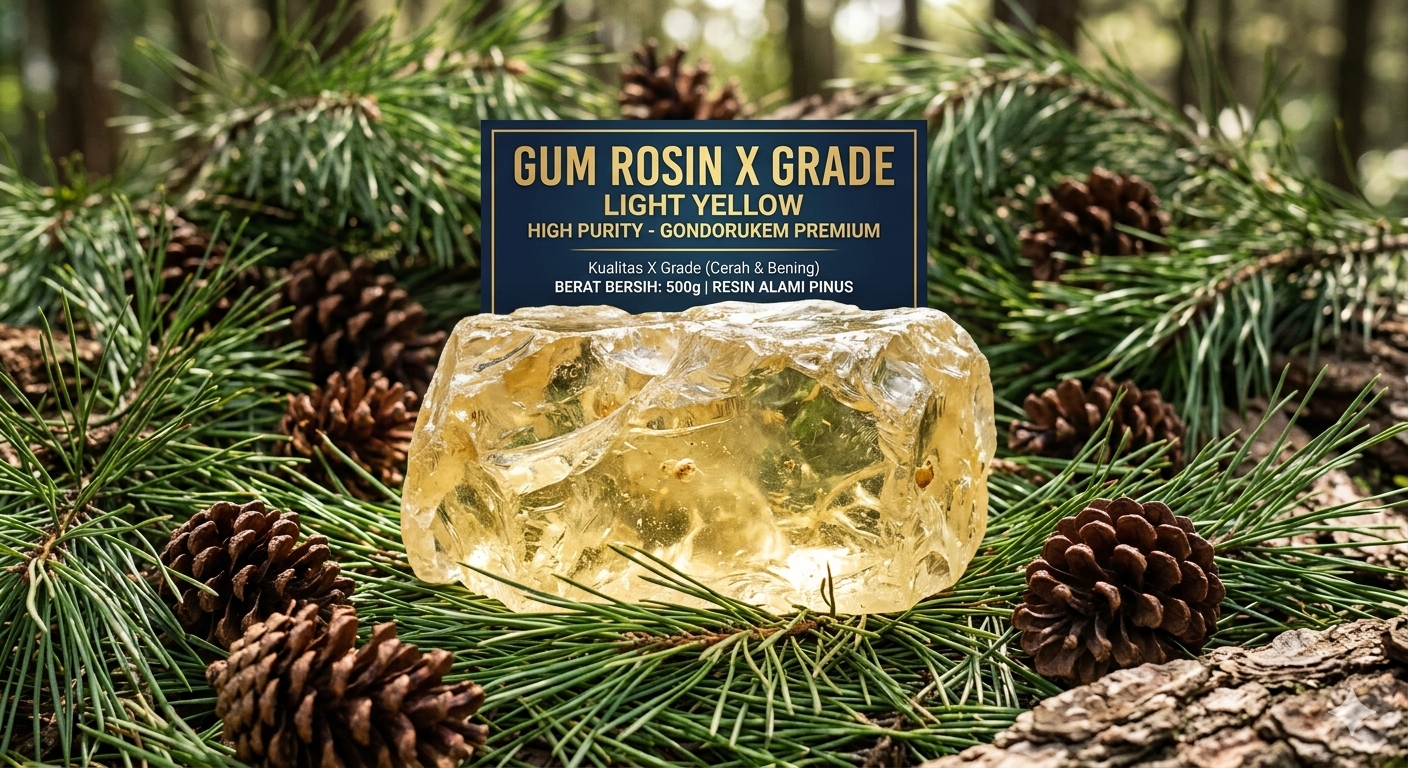
X Grade
  • Color : 4-5
  • Softening : 80.00 °C
  • Acid Value : 169 - 180
  • Saponification : 187-189
  • Iodin Value : 5.47
  • Impurity : 0.031%
  • Ash content : 0.020%
  • Volatile oil content : 1.549%

WW Grade

  • Color : 7-9
  • Softening : 80.00 °C
  • Acid Value : 170 - 180
  • Saponification : 187-189
  • Iodin Value : 5.47
  • Impurity : 0.031%
  • Ash content : 0.020%
  • Volatile oil content : 1.549%

Terpentine Oil

  • Specific Grafity at 25°C : 0.8576
  • Color : Clear
  • Alpha pinene : 81.36 %
  • Beta pinene : 2.01%
  • Delta 3 Carene : 10.73%
  • Flash point : 35.97°C
  • Optical Rotation : +36.81°
  • Acid Value : 1.26

Gum Rosin Merkusii Oleo Pine Resin Grade X & WW

Where the resin comes from decides what the rosin does

Indonesia produces around 80,000 tonnes of gum rosin a year — roughly 9.2% of world output — from managed Pinus merkusii stands in Java and Sumatra. We supply it by the grade, the drum and the container, with a Certificate of Analysis on every lot..

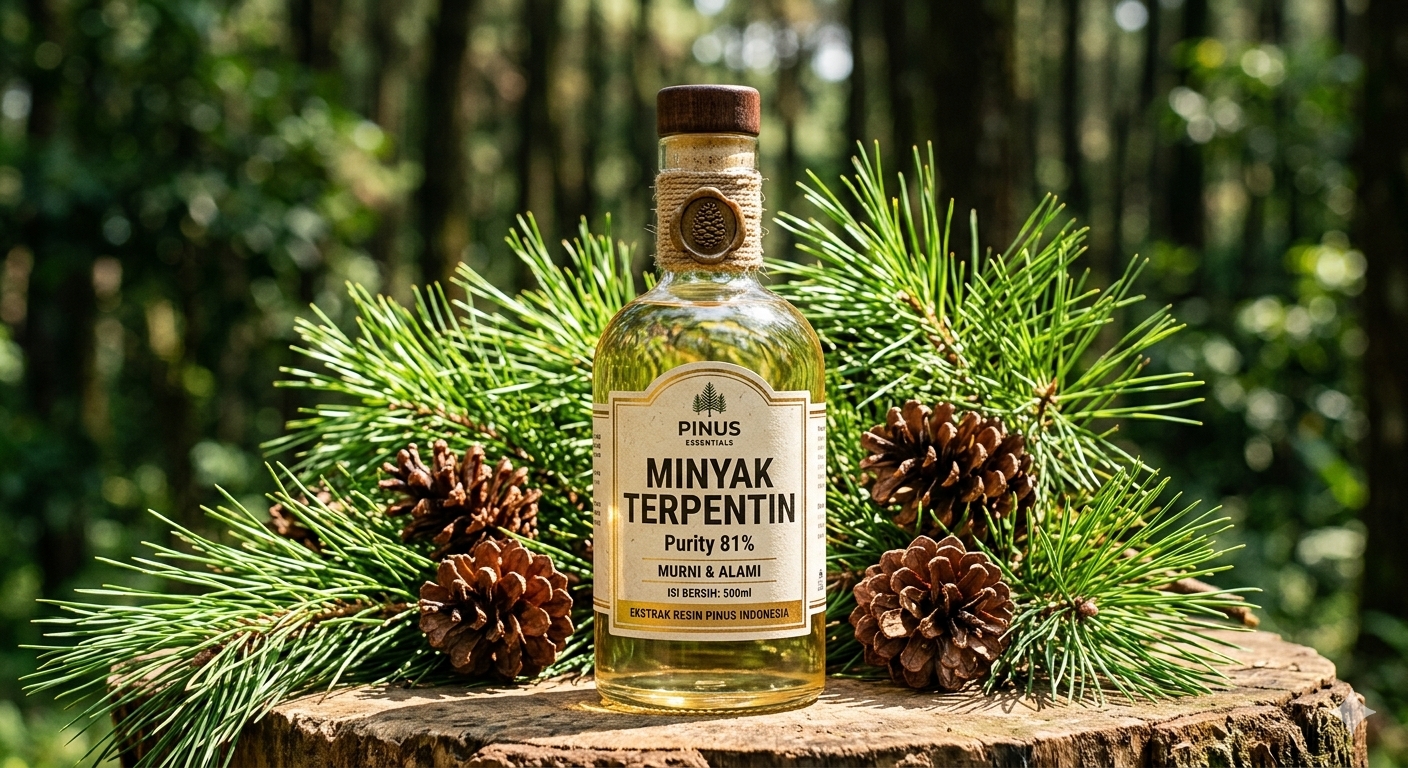
Turpentine Oil with the purity 81-82 % Product result

Gum turpentine oil. The volatile half of the same tap.

Steam-distil merkusii oleoresin and roughly one part in five comes over as turpentine. Indonesia makes about 17,000 tonnes of it a year — an α-pinene-rich feedstock that India already buys by the shipload.

three steps, and the yield is decided in the first one.

This oil is distilled from living-tree oleoresin, not recovered from kraft pulping. That matters downstream: no sulphur odour to strip out, a cleaner α-pinene cut, and a smell that fragrance houses can actually work with. It is the same tapping operation that produces our gum rosin — the two come off the same still.

Oleoresin in

Field-collected merkusii gum arrives from Java and Sumatra tapping blocks, screened and settled.

Separation & drying

Condensate is decanted from water and dried down — this is where the acid value and moisture figures are won.

Distillation

Steam distillation splits the oleoresin: turpentine overhead, rosin as the residue — typically 4:1 to 6:1 by weight.

Origin

Two islands, two resin profiles

Where the resin comes from decides what the rosin does.

Pinus merkusii is the only pine that crosses the equator naturally. Published analysis of Indonesian merkusii found that turpentine oils and the neutral fraction of the gum oleoresin differ measurably by locality, and so does the acidic fraction that becomes rosin. Sumatra resin and Java resin are not interchangeable — so we keep them separate, and we tell you which one you are buying.

Java — the plantation supply

Java is where Indonesia's pine chemical industry is concentrated. Perum Perhutani runs the managed Pinus merkusii plantations across Central and East Java and operates nine pine chemical factories, producing about 65,000 tonnes of gum rosin a year — roughly 81% of national output. Plantation material means a predictable tapping calendar and tighter lot-to-lot consistency.

Regions
Pekalongan · Banyumas · Kediri · Bondowoso
Managed by
Perum Perhutani — state forestry, nine pine chemical plants
Rosin output
~65,000 t/yr — about 81% of Indonesia's total
Turpentine
~14,000 t/yr from the same distillation
Ports
Tanjung Emas · Tanjung Perak · Tanjung Priok
Best for
Repeat formulation work needing lot-to-lot consistency
SCHEMATIC — NOT TO SCALE SUMATRA Aceh — Tapaktuan North Sumatra — Tapanuli Kerinci & Jambi highlands PORT: BELAWAN / MEDAN JAVA Pekalongan Banyumas Kediri PORTS: SEMARANG / SURABAYA / TANJUNG PRIOK

Adhesives take the largest share — 43.6% of the market.

Rosin ends up in adhesives, paper sizing agents, printing inks, solders and fluxes, surface coatings, electronics insulation, synthetic rubber, chewing gum bases, soaps and detergents. Tell us the end use and we will point you at the grade — the wrong grade is the most expensive line item in a rosin contract.

Soaps, gums & coatings

Rosin soaps, chewing gum base and surface coatings — the segment that most often specifies food-contact documentation.

Rubber & tyres

Disproportionated rosin soap is the emulsifier for SBR polymerisation; rosin also works as a processing tackifier.

Adhesives & tackifiers

Hot-melt, pressure-sensitive and packaging tapes. Rosin esters and glycerol/pentaerythritol esters start here.

What are you waiting for?

Ready to take the next step? Let's bring your vision to life! Explore our services and get in touch today for a consultation. Together, we'll make it happen.

Sold as a solvent. Bought as a feedstock.

Turpentine still moves as a paint and varnish solvent, but the tonnage that leaves Indonesia goes into terpene chemistry — fragrance and flavour intermediates, and vitamin synthesis. India takes 87.67% of it, and that is exactly why.

α-pinene →
α-terpineol & pine oil
Hydration of α-pinene is the classic route to α-terpineol — the lilac note in soaps, cleaners and disinfectants, and the volume outlet for Indonesian turpentine.
α-pinene →
Camphor & isoborneol
Isomerisation to camphene, then to synthetic camphor and borneol esters for pharma, plasticiser and devotional markets.
α & β-pinene →
Fragrance chemicals
Linalool, citral, geraniol, nerol and the ionones downstream of them — the pine route into flavour and fragrance houses.
β-pinene →
Terpene resins
Polyterpene tackifiers for hot-melt adhesives and chewing gum base — the sister product to rosin esters.

Δ-3-carene →
Carene chemistry
The second-largest cut in merkusii oil. A route to carvone-type and menthol-adjacent intermediates, and to specialty solvents.
Neat oil →
Solvent & thinner
Artists' and industrial paint thinner, varnish solvent, wax and polish carrier, and rubber reclaim processing.

α-pinene is what you are buying Everything else is context.

Indonesian merkusii turpentine is dominated by α-pinene, with Δ-3-carene as the second component and β-pinene well behind it. Published analysis of Indonesian merkusii confirmed that the turpentine composition differs measurably between Sumatra and Java localities — so if your process is pinene-fraction sensitive, qualify one origin and stay on it.

employees

230

happy clients

+3M

years of experience

+25

offices worldwide

179

Contact us

    • PT. ERZAPERDANA MARRITZA INDONESIA
    • +62 27617800
    • sales@epmindochemical.com

    HS 3805.10 · CAS 8006-64-2 · UN 1299, Class 3, PG III · Pinus merkusii Jungh. & de Vriese
    Market and production figures cited from: Int. J. Sustainable Development & Planning 17(6) 2022; IMARC turpentine price trend (to Q2 2026); FAO Gum Naval Stores; Pakistan J. Biological Sciences 9(1) 2006. Specification values are indicative — the Certificate of Analysis for your lot governs.

    © 2020 Indonesia Gum Rosin